
Demonetisation was not a good idea and the time should have been utilised instead to fine-tune the Goods and Services Tax before it was introduced, said Gita Gopinath, John Zwaanstra Professor of International Studies and of Economics at Harvard University, in an interview with Advait Rao Palepu.

On whether the futures trading policy of the government has resulted in the extremely high inflation (as seen some months ago), he said the committee to study the impact of futures trading on the prices of agricultural commodities could not draw any strong conclusion. The latest inflation rate as on December 6, measured by the wholesale price index, stood at 6.84 per cent. The rate of inflation had touched a high of 12.91 per cent on August 2.
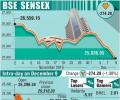
The S&P BSE Sensex ended 274 points to trade at 25,036.

Hindustan Unilever Ltd on Friday reported a 1.08 per cent increase in consolidated net profit at Rs 2,508 crore in the third quarter ended December 2023. The company had posted a consolidated net profit of Rs 2,481 crore in the same quarter last fiscal, Hindustan Unilever Ltd (HUL) said in a regulatory filing. Its revenue from sales of products was marginally down to Rs 15,259 crore during the quarter.

Traders estimate around 30 per cent of rabi crop damage.

Moody's expects growth in G-20 advanced countries to be stable at 1.8 per cent for 2016.
ITC Ltd on Friday reported a 23.09 per cent increase in consolidated net profit at Rs 5,070.09 crore for the third quarter ended December 2022, helped by growth momentum across its operating segments. The diversified company had posted a net profit of Rs 4,118.80 crore during the October-December quarter of the previous fiscal, ITC said in a regulatory filing. Its revenue from operations was up 3.56 per cent to Rs 19,020.65 crore during the quarter under review, as against Rs 18,365.80 crore in the corresponding period of the previous fiscal.

How has the NDA government fared in tackling price rise, an issue it raised hell over in the run-up to the Lok Sabha elections? The Rediff Labs team finds out.

Cooking gas LPG prices may be hiked next week after under-recovery on the fuel widened to over Rs 100 per cylinder, sources said insisting that the rate hike, including the quantum of increase, is dependent on government permission. If allowed, this will be the fifth increase in cooking gas rates across all categories - households using subsidised gas for cooking and heating purposes, non-subsidised fuel and industrial-sized gas. LPG rates were last hiked by Rs 15 per cylinder on October 6, taking the total increase in rates since July to Rs 90 per 14.2-kg cylinder.

Hardening prices of manufactured items during the month may refrain the Reserve Bank of India from cutting rates in its policy review on February 8.

Moody's on Thursday slashed India's growth estimate for the current year to 9.1 per cent, from 9.5 per cent earlier, saying high fuel and fertilizer import bill could limit the government's capital expenditure. In its 'Global Macro Outlook 2022-23 (March 2022 Update): Economic Growth will suffer as fallout from Russia's invasion of Ukraine builds' report, the rating agency said Russia's invasion of Ukraine has significantly altered the global economic backdrop through three main channels -- spike in commodities prices, risks to global economy from financial and business disruption and dent in sentiment due to heightened geopolitical risks. It said Russia is the only G-20 economy that will contract this year and forecast that its economy will shrink 7 per cent in 2022, and 3 per cent in 2023, down from projected growth of 2 per cent and 1.5 per cent respectively, before the invasion of Ukraine.

Projects in other developed countries, such as Canada, and even in developing nations like Mozambique and Indonesia are also in limbo

India's macroeconomic fundamentals are strong to deal with global challenges and the central government is committed to sticking to the fiscal deficit target of 6.4 per cent of the GDP for the current fiscal, official sources said on Monday. The government is taking steps to deal with the spiralling crude oil prices in the international market, the sources said. India meets nearly 85 per cent of its oil demand through imports and a weaker rupee makes imports costlier.

A host of factors including the reform measures taken by the government and decline in global oil and commodity prices have led to lower inflation, the Finance Ministry said on Wednesday.

He also feels that central banks have injected too much liquidity, which is not sustainable and will end badly for investors.

Exports declined for the fourth-consecutive month by 10.3 per cent year-on-year to $34.98 billion in May, while the trade deficit widened to a five-month high of $22.12 billion. According to the data released by the commerce ministry on Thursday, key export sectors recording negative growth include petroleum products, gems and jewellery, engineering goods, ready-made garments of all textiles and chemicals. Imports also declined 6.6 per cent, six-month in a row, to $57.1 billion against $61.13 billion in the same month last year, the data showed.

If international crude oil prices zoom past the current level of about $90 per barrel and move towards $100 and beyond, middle-class consumers are not going to keep quiet about their discomfort, points out Arun Balakrishnan, former chairman and managing director, Hindustan Petroleum.

'It makes sense to have gold in one's portfolio keeping the political and economic risks of 2024 in mind.'

Operating margins have been the primary driver of corporate earnings in India in recent quarters, despite revenue growth suffering from weak consumer demand. Companies across sectors have reported a sharp improvement in earnings before interest, tax, depreciation, and amortisation (Ebitda) margins over the past two years, benefiting from lower commodity and energy prices. Higher margins more than compensated for slower revenue growth, resulting in double-digit growth in net profit for five consecutive quarters.
The commodities bull run was expected to continue because there was no extra supply to drive prices down, said investment guru, Jim Rogers.

According to D&B, food price levels might witness a rebound as foodgrain production is estimated to have declined during 2014-15.

Sales of fast-moving consumer goods (FMCG) witnessed significant recovery in September after enduring a double-digit decline in August, according to data furnished by Bizom. Kirana stores in rural areas stocked up in preparation for the festival season, which began in September. This, combined with rainfall reaching 113 per cent of the long-perid average for the month, contributed to a boost in sales.

US brokerage Bank of America-Merrill Lynch on Tuesday said its sees the first rate cut this fiscal only in March next as inflation is expected to fall only by December end on a decline in commodity prices driven by the US Fed tapering.

After withdrawing record funds in 2021-22, foreign portfolio investors (FPIs) continued their sell-off in the last fiscal too and pulled out Rs 37,631 crore from Indian equities amid aggressive rate hikes by central banks globally. The outflow trend is likely to reverse in the current financial year since India has the best growth potential in the financial year 2023-24 (FY24), VK Vijayakumar, chief investment strategist at Geojit Financial Services, said. Market analysts believe that FPI flows in the current financial year would be decided by a host of factors, such as the US Federal Reserve's policy stance, oil prices movement and development in the geopolitical situation.

Investors still seem to have a disinflation bias to their thinking.

Samajwadi Party candidate Afzal Ansari is the incumbent MP and slain don Mukhtar Ansari's elder brother. Afzal had won the 2019 election on a BSP ticket after defeating the BJP's Manoj Sinha, now the J&K lieutenant governor.

The United Nations on Wednesday pared down India's growth forecast by 20 basis points to 5.8 per cent for 2023 calendar year, citing higher interest rates and risks of recession in the developed world weighing on investment and exports. "Economic growth in India is projected to moderate in 2023, with higher interest rates weighing on investment and slower global growth weakening exports," it said in its latest World Economic Situation and Prospects report. The report has projected global trade to contract 0.4 per cent and the world economy to grow at 1.9 per cent in 2023.

Anamika Pareek answers five most frequently asked questions about investing in silver ETFs

International Monetary Fund Chief Economist Gita Gopinath tells Indivjal Dhasmana high-frequency indicators for the third quarter of 2021 indicate momentum in economic recovery in India.

Technical analysis can help you understand market trends so that you can make informed investment decisions, says Rupak De, senior technical analyst at LKP Securities.

Foreign investors pumped in Rs 11,119 crore in the Indian equities in December, making it the second consecutive monthly inflow, despite increasing concerns over the re-emergence of Covid-19 cases in some parts of the world. However, foreign portfolio investors (FPIs) have turned cautious in recent days. The inflow in December was much lower compared to Rs 36,239 crore invested by FPIs in the month of November, data with the depositories showed.

'Through the course of the year, we expect the economic weakness generated by demonetisation will give way to normalisation of growth conditions.'

IMD expects day temperatures to remain above-normal in select regions across the country between March and May 2021.

'Indices will remain range bound in 2022 as earnings catch up with the current multiples.'

The RBI's surprise rate hike may have been prompted by its inability to convince the government to cut excise duty on petrol and diesel and take other supply-side measures to tame runaway inflation, sources aware of the central bank's thinking said on Thursday. There has been a record Rs 10 a litre increase in petrol and diesel prices in a matter of 16 days beginning March 22, which has further fuelled the already high commodity prices. The RBI, which is mandated to ensure inflation is under 6 per cent, acted with a 0.40 per cent increase in repo rate to check prices before they went completely out of hand.

Leading stock exchange BSE has decided to discontinue Stop Loss Market (SL-M) orders from October 9 to prevent erroneous order placement arising out of manual or algo trades. This came after a recent freak trade incident caused a lot of angst among the trading community earlier this month due to an SL-M order. SL-M is a type of order that automatically sells or buys a security at the market price when the trigger price is reached.

Soren, addressing a rally in Bhognadih on the occasion of 'Hul Diwas', also claimed that the saffron party has turned 'jittery' after his release from jail and its leaders are 'conspiring' against him again.

'Those betting against PSUs will likely be punished in this upswing.'


In five years, per-employee revenue for IT companies grew at 9 per cent each year.
